VAEP Shareables are images utilizing graphics, colour and text to quickly teach people about vaping. Each Shareable provides the reference on the bottom.
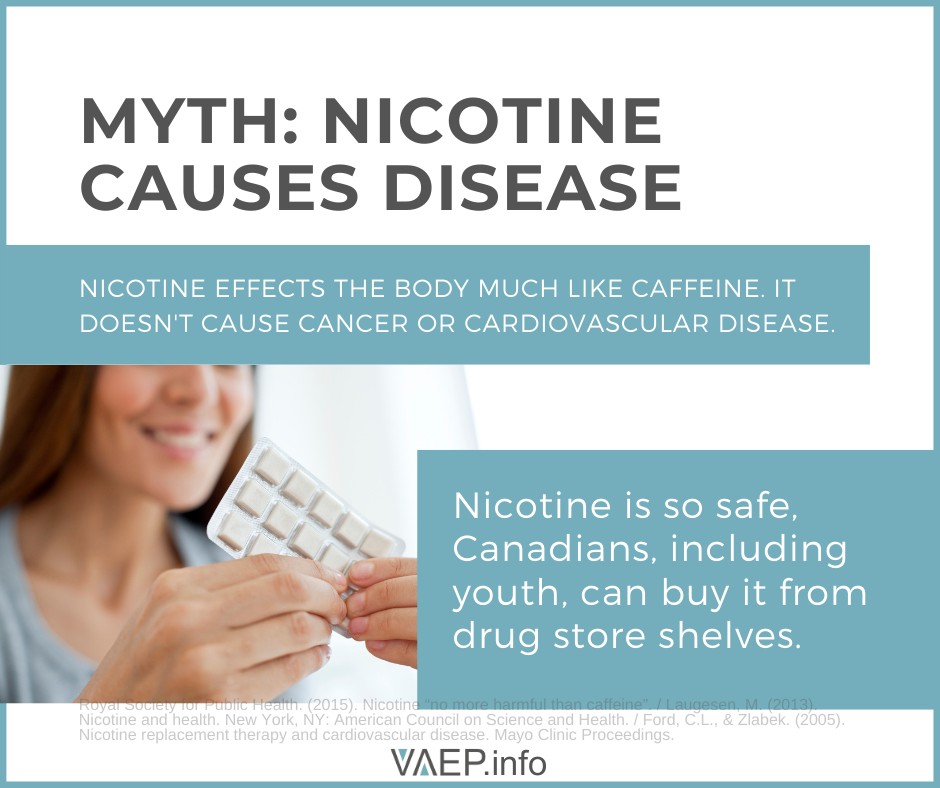
Nicotine myth
Like any substance, too much can cause adverse effects. For instance 4000mg of Tylenol can cause severe liver damage.
Medications that are available on the shelves in a drug store are called over-the-counter (OTC) medications. They available without a prescription and used safely by the public.
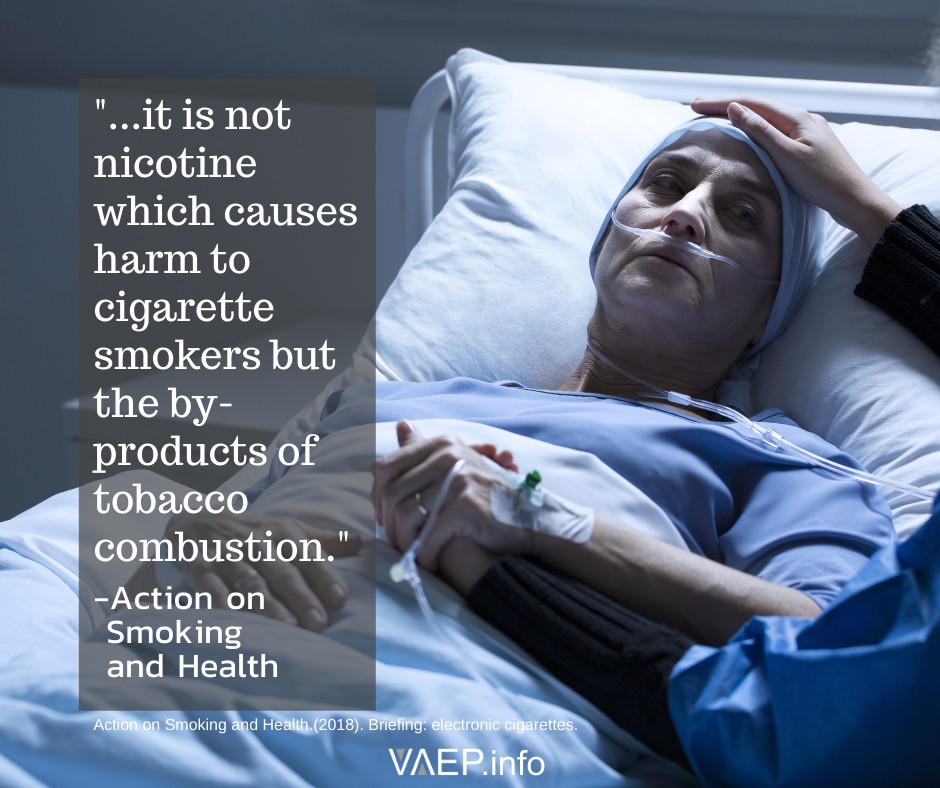
Nicotine is a mild stimulant and can form a dependance, much like caffeine. Nicotine in eliquid helps smokers transition to a source of nicotine that doesn’t kill them.
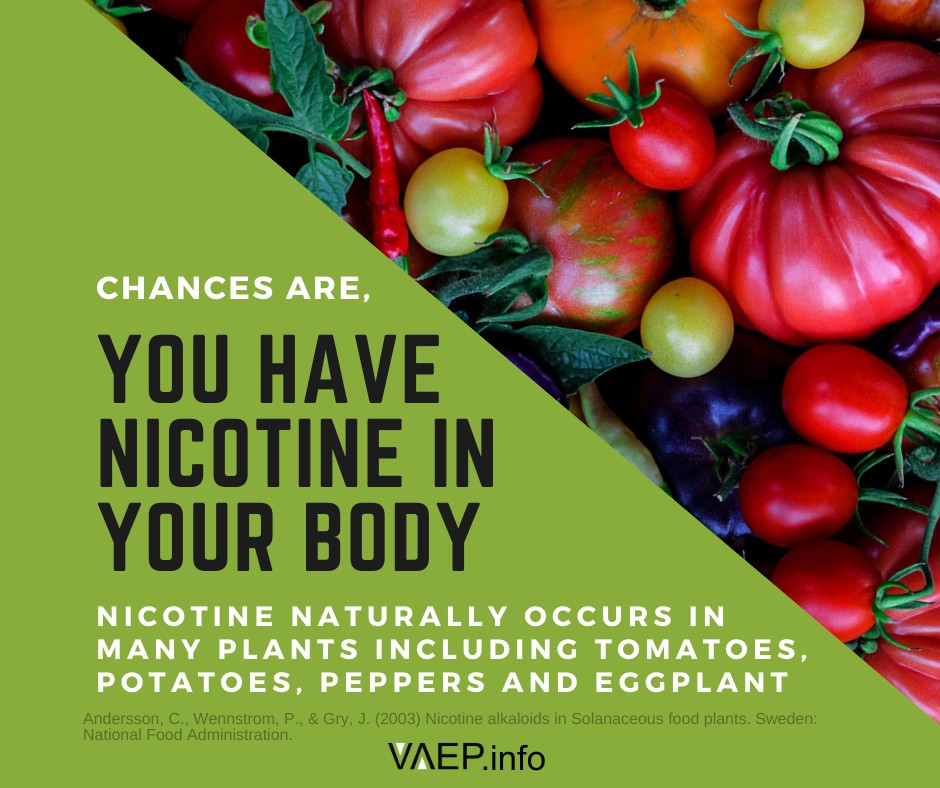
Nightshade plants naturally have nicotine in them to protect them from insects. So if you eat tomatoes, potatoes, peppers and eggplants, you have nicotine in your body.
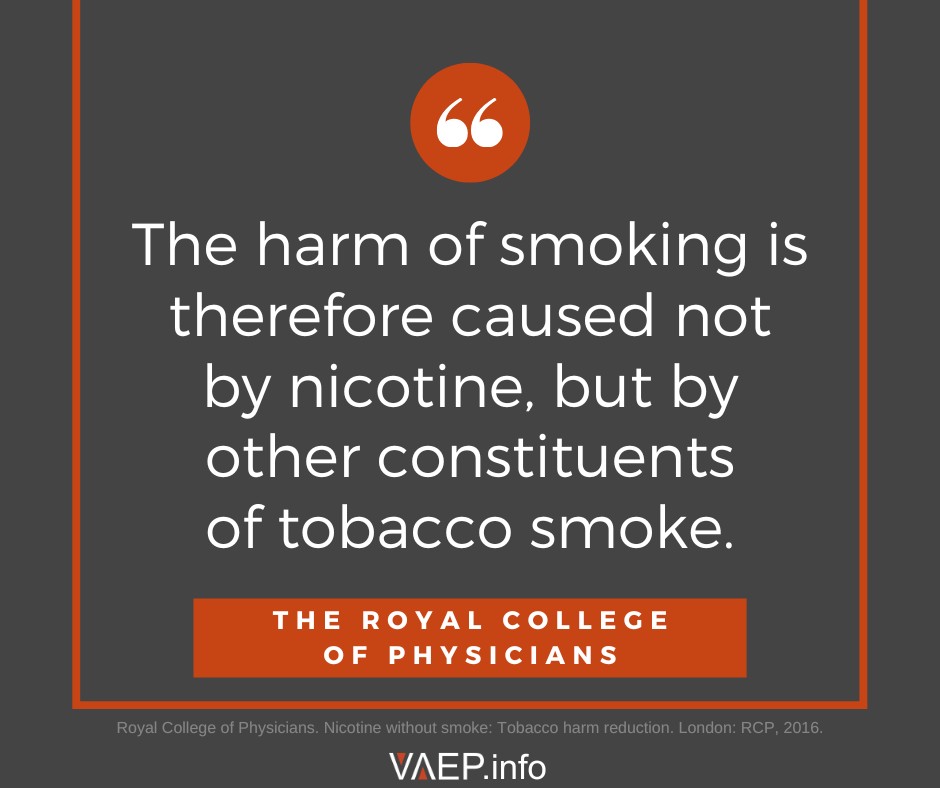
Vaping offers the smoker an alternative that allows them to continue inhaling nicotine without all the disease causing chemicals found in cigarette smoke.
Dr. John Britton of the U.K. Center for Tobacco and Alcohol Studies explains that nicotine addiction isn’t a big deal because “…nicotine itself isn’t particularly hazardous.”
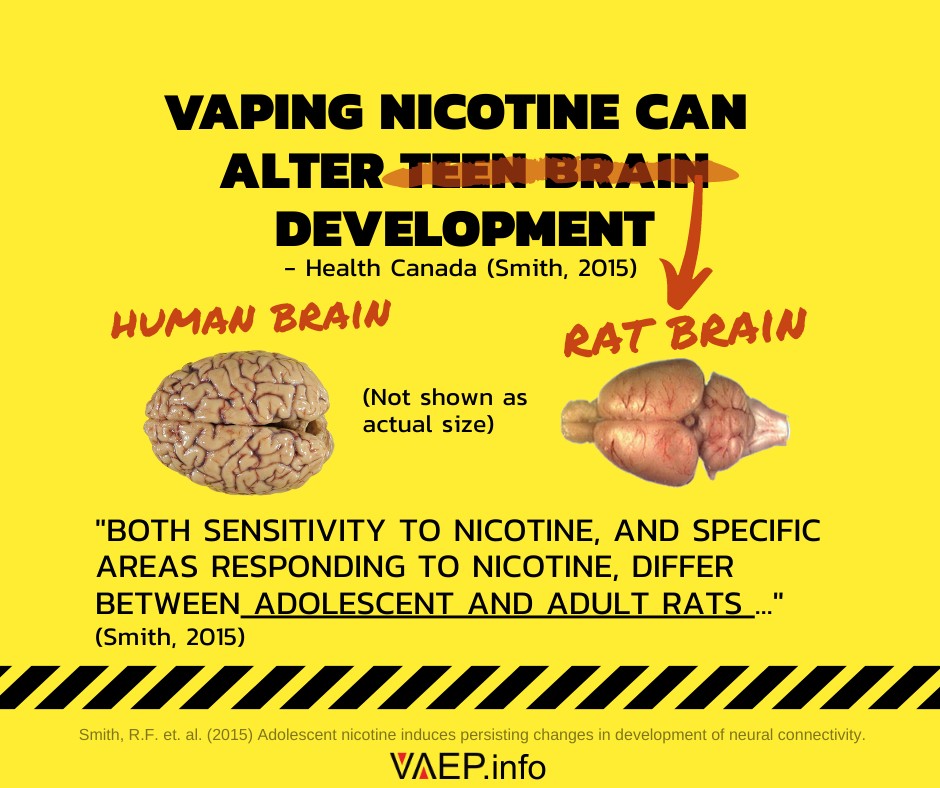
It would be unethical to give nicotine to teens and then test their brains. In this referenced study used by Health Canada to scare smokers away from harm reduction, rats were given nicotine all day through an IV (2mg/kg/d).
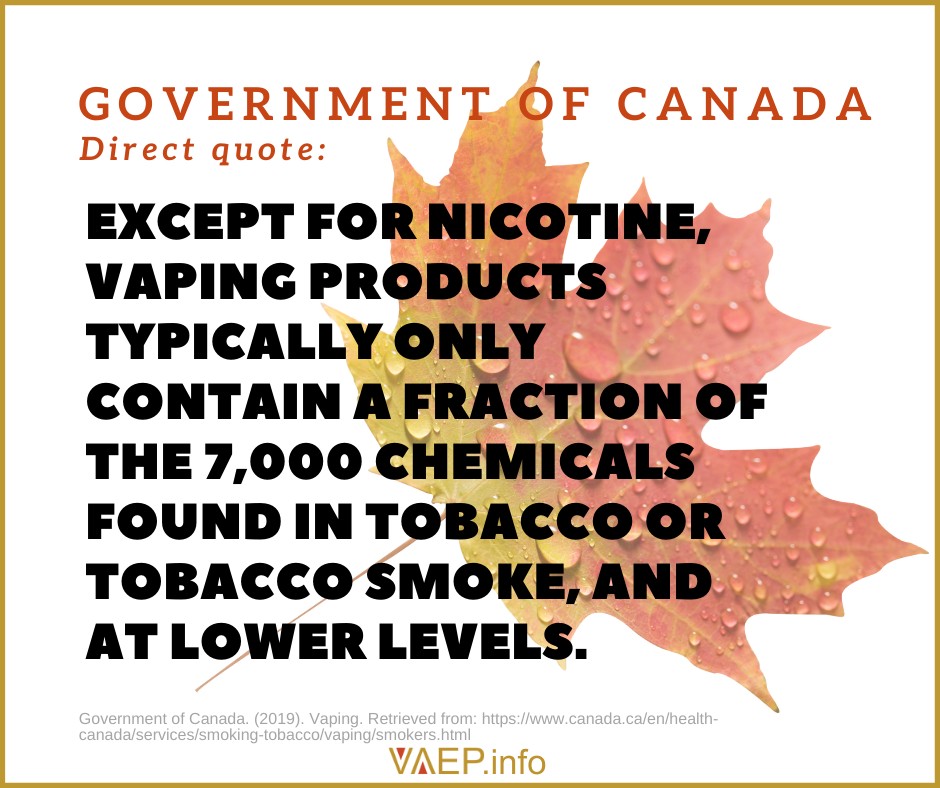
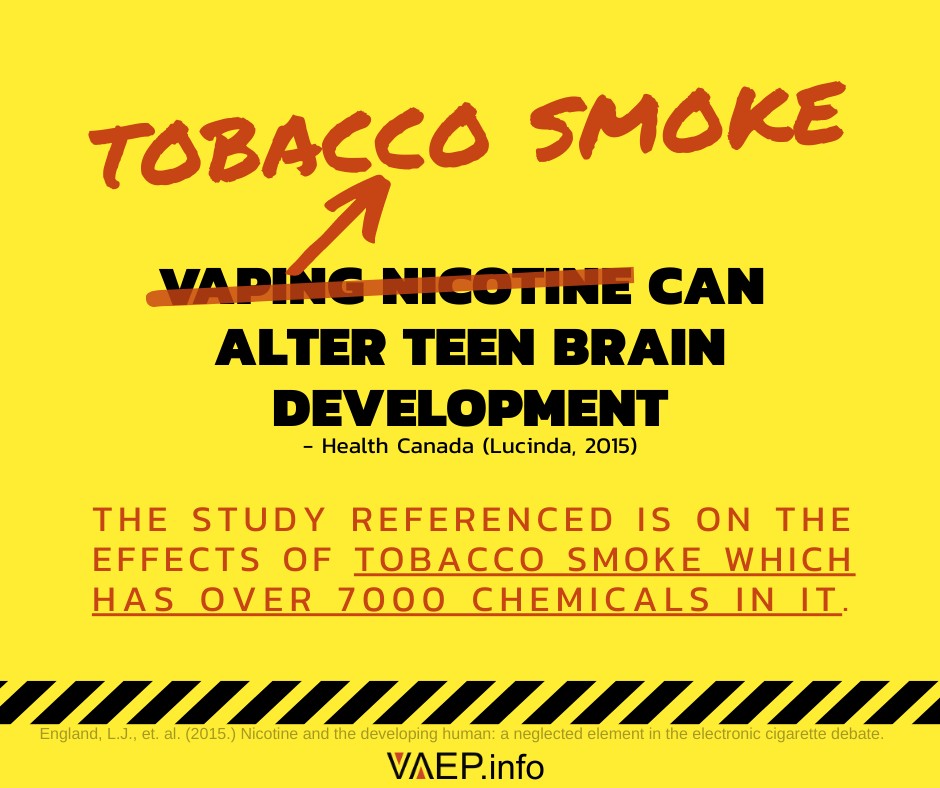
Tobacco smoke has 7000 chemicals in it, many of which cause damage to the body. This fear-provoking message from Health Canada suggests that all smokers have some kind of brain damage. How is it that they can identify nicotine as the cause and not the 7000 toxins found in cigarette smoke?
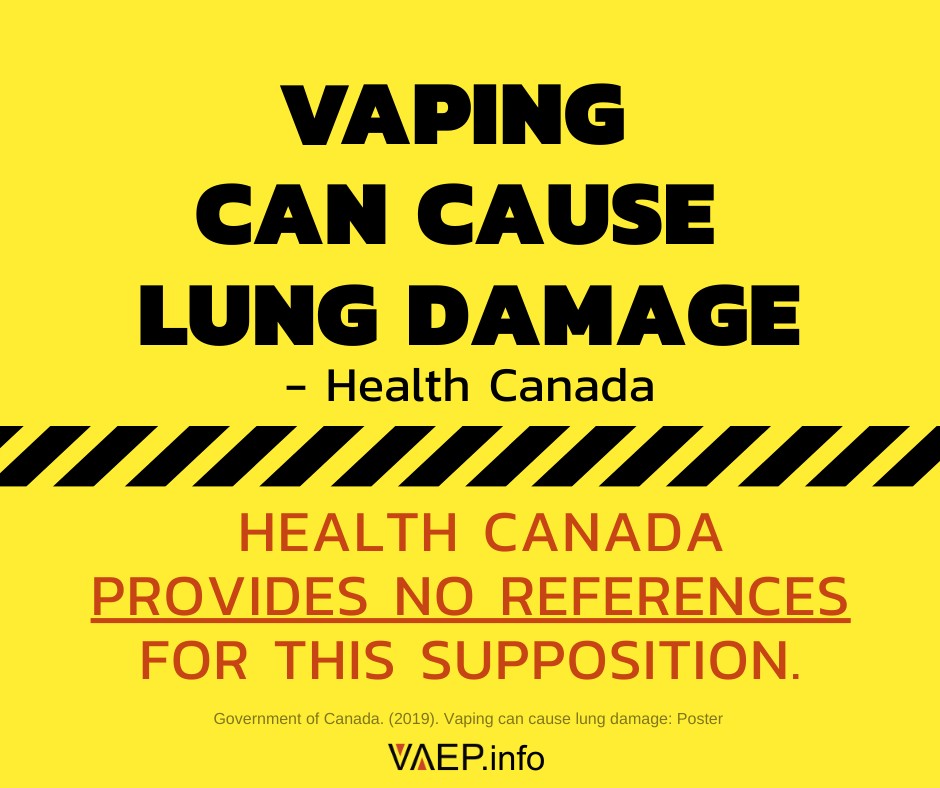
Health Canada claims vaping “can” cause lung damage. They provide no evidence to support this speculation. Health Canada “can” deceive the public about harm reduction. They “can” have a motive to promote disease and serve the pharmaceutical industry.